Server selection, deployment and build
Decide location, hardware, model and capacity from information classes and number of users.
What must not be sent. Who can see what. What the AI may execute. Decide before you start.
The core of that is PrivateLLM server selection, deployment, build and operations. We design it together with four controls (external transmission, access permissions, what the AI may execute, and human approval) and check it with attack scenarios. PrivateLLM alone does not make a leak impossible, so OCR, logs, backups, authentication and operations are evaluated too. “Has your business put its OMUTSU on?”
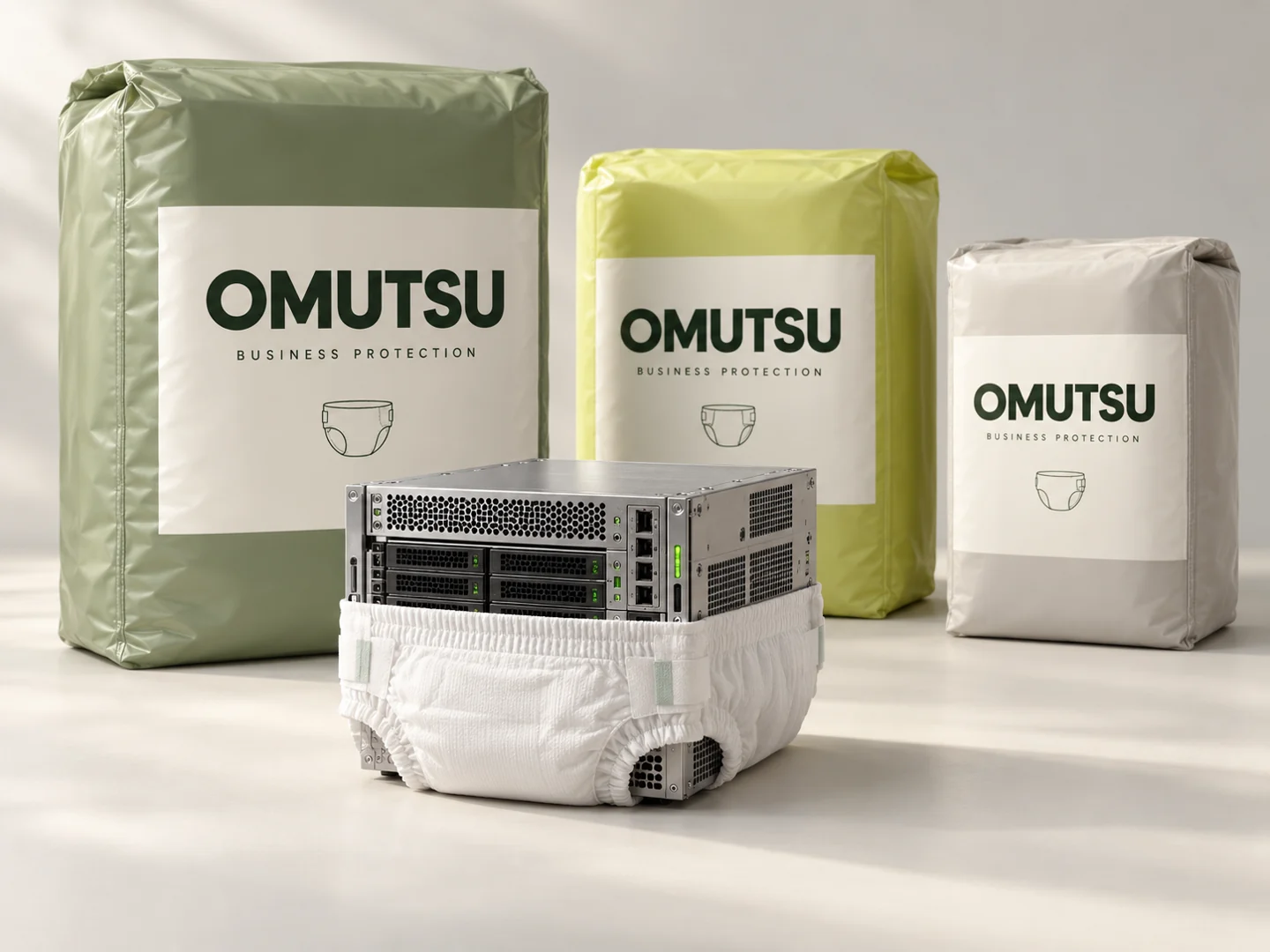
PrivateLLM is the central means of information-leak control. We take on server selection, deployment and build, data paths, authentication and permissions, updates, monitoring and operations through one contact.
Decide location, hardware, model and capacity from information classes and number of users.
Check not only inference but also OCR, logs and backup paths, and who can see what.
Decide updates, monitoring and incident response after deployment and hand over to operations.
“I only asked AI a quick question.”
“I thought it was internal only.”
Consider both easier work and responsible information handling.
From organizing documents to putting AI to work.
We build the systems you need around how your company works.

Disclosures have continued since summer, with large-scale cases in both September and October. IPA opened a special incident support desk on October 16.
Of disclosures in 2026
81cases
Period: January 1–October 6, 2026 / 119 cases
One diaper = one disclosed case. Colors distinguish disclosure periods.
Of 119 disclosures this year, 81 came from July onward.
Macnica’s selected domestic Web intrusions with similar characteristics, including possible leakage. Shared-provider cases are grouped and ransomware and other categories excluded; this is not a national incident total.
Examples by company disclosure date. Record counts are not added together, and these examples are not monthly incident totals.
Warned following cases involving large volumes of leaked or potentially leaked personal data.
Read the alert ↗Reported successive domestic data leaks around September 2026 and urged checks including APIs and management systems.
Read the alert ↗Opened a special support desk for organizations nationwide following successive data leaks caused by unauthorized access.
Read the alert ↗93 articles
+ 3 articles
84 articles
+ 4 articles
126 articles
+ 6 articles
July 84 → August 126 articles. Up 50% month on month.
Counts are articles from one publication and include follow-ups, not national incident totals or affected people. Comparable September/October monthly values are not confirmed and have not been filled in.
These are processed statutory reports through March 2026. They differ from the monthly article counts above in both metric and period, and do not describe the recent trend.
12,120 cases
+ 120 cases
Apr 2023–Mar 2024
Comparison base
19,056 cases
+ 56 cases
Apr 2024–Mar 2025
+57.2% year on year
17,139 cases
+ 139 cases
Apr 2025–Mar 2026
−10.1% year on year
FY2025 (through March 2026) fell 10.1% year on year. This is a different period from the recent August-onward developments.
These are processed statutory reports, not affected people or AI attacks. “Incidents” include leakage, loss, damage and suspected cases. This is not a census of all incidents.
From first steps to everyday use.
Choose by the situation at work, rather than your job title.
Showing 6 use cases.
For scattered documents and unclear permissions.
US$500 per engagementDetailsFor “We want to use AI. But where do we start?”
US$349 / month (up to 2 hours; one month is fine)DetailsFor dedicated AI infrastructure that handles your confidential information.
US$3,000 (teams of up to 50) / US$6,000 (51 or more)DetailsFor sharing documents across departments, projects, and companies.
US$3,000 (teams of up to 50) / US$6,000 (51 or more)DetailsFor business process automation and development with AI.
US$5,000 (fixed, 2 weeks)DetailsFor updates, maintenance, and operations after deployment.
US$349 / month (up to 2 hours)DetailsChoose one service or combine them. We clarify what you need and propose a configuration and cost.
OMUTSU prices cover a defined scope of human technical support. We start with one task or one environment, and quote in advance before anything grows.
OMUTSU is a technical-support brand from LLL. Prices cover the scope of human support described, not software fees or a complete server package.
US$349 / month (up to 2 hours; one month is fine)
A monthly plan to try one task with AI tools you already have.
US$500 per engagement
Inventory the documents for one task and set access and update rules in writing.
US$3,000 (teams of up to 50) / US$6,000 (51 or more)
A 30-day test of a private LLM on your own documents and workload.
US$3,000 (teams of up to 50) / US$6,000 (51 or more)
A 30-day prototype of permission-aware document search for one department and one document set.
US$5,000 (fixed, 2 weeks)
A two-week prototype of one workflow that runs with human approval.
US$349 / month (up to 2 hours)
Monthly checks and update planning for one existing environment.
Prices in USD. Taxes, payment/FX fees and third-party service, hardware, cloud and API costs are extra. Work beyond the stated scope or hours is quoted before it starts and done only after your approval.
From “probably fine” to controls you can explain.

BEFOREPeople remember versions and sharing locations.
AFTERDefine source records, classification and ownership.
BEFORESearch may expose information beyond a person’s role.
AFTERRestrict retrieval to the user’s permissions.
BEFOREDestinations and allowed actions are unclear.
AFTERDefine destinations, action scopes and approvals.
The diaper is the metaphor. Data and action boundaries are the implementation.
See the engineering ↗Where data goes. Who can do what.
We design boundaries across the whole business process, beyond the deployment location.
We review the content to be sent, its destinations, and the terms of use, and control the routes in the application.
With a focus on dedicated environments, we review the data paths for inference, retrieval, storage, and logging.
The architecture diagram illustrates the design approach.
We define the scope of implementation and validation for each business process, information classification, and operating environment.
Open the diaper metaphor and see what each control does.
Source records, sensitivity and ownership
Identity, retrieval permissions and boundary tests
Destinations, tool permissions and human approval
Logs, updates, regression checks and recovery
A conceptual explanation of controls, not a physical product specification or security measurement.
Understand the work. Start small. Verify, then expand.
Start with a conversation before choosing hardware or products.
We clarify your challenges, the documents involved, and constraints on users and information.
We test quality, usability, capacity, and cost in one business process.
We design permissions, integrations, and human review, then proceed with implementation and acceptance checks.
We assign responsibility for updates, maintenance, and operations, then improve the system to suit your work.
From getting started to defending against attacks.
Ready to use in tomorrow's work.
For the “Is this right for us?” before you buy.
Yes. We can help you choose your first use case, organize business data, and decide what information may be entered. You do not need to have selected a product or server.
OMUTSU is LLL’s technology service brand, making it easier to choose business data organization, AI adoption, PrivateLLM infrastructure, system integration, and operational support by use case. The diaper packages represent these services.
An on-premises server alone is not a complete safeguard. We examine destinations for inference, search, storage, and logs, along with user permissions, external integrations, maintenance, and updates, then design the necessary controls.
Not necessarily, but the center is PrivateLLM. An external AI service can be considered as a complement only within the information and destinations you decide, based on your information classes and policy. Even then, destinations and the information sent are made explicit and the path is controlled in the application.
After reviewing the materials in scope, we consider an inventory, text and table extraction, classification, and arrangements for updates and permissions. Extraction accuracy and the work required depend on the format and condition of the materials, so we begin with a representative sample.
We assess this by reviewing connection methods, contract terms, permissions, and information destinations in your existing environment. We begin with the integrations you need, taking account of current operations and human review procedures.
Prices are set per service. Monthly: "AI First Steps (one task)" and "Ongoing Care (one existing environment)" are US$349/month (one task or one existing environment, 2 hours a month). One-time: "Data Organizing Plan (one session)" is US$500 per engagement, "Private LLM PoC" is US$3,000 (teams of up to 50) / US$6,000 (51 or more), "Private LLM PoC (with department access levels)" is US$3,000 (teams of up to 50) / US$6,000 (51 or more), and "2-Week AI Workflow PoC" is US$5,000 (fixed, 2 weeks). These are prices for a defined scope of human technical support, not software fees or a complete server package. "Private LLM PoC": Includes evaluation on LLL's existing infrastructure within the agreed PoC scope. Customer hardware purchases, production hosting, and cloud or API use outside the agreed PoC scope (quoted separately). Otherwise, taxes, payment/FX fees and third-party service, hardware, cloud and API costs are extra, and work beyond the stated scope or hours is quoted before it starts and done only after your approval. Lead time depends on the task, the volume and condition of documents, number of users, where it is installed, and the scope of integration and operations.
Tell us what you can about the business process you want to improve, the types of documents you want to use, the number of users, and information that cannot be sent externally. Please do not include or attach confidential documents, personal information, or passwords in your initial inquiry.
You can ask for help centered on PrivateLLM server selection, deployment, build and operations: sorting out which information may go into AI and which must not leave your company, access permissions for each user, the scope of operations the AI may execute, and a step where a person approves important operations. Checking against attack scenarios, such as instructions hidden in documents, is also covered. PrivateLLM alone does not prevent leaks, and this does not mean every leak is prevented or that a certification is obtained. Business-system development, data migration, and production hardware purchases, hosting and operation and maintenance are quoted in advance as a separate scope.
Overlay OMUTSU on whatever your camera sees. Video is processed on your device only and is never sent.
Your documents are scattered. You want to start using AI. You want to keep it in-house.
No specification yet? We can start with how you work today.
Continue to the LLL contact page.
Please do not include confidential documents or passwords.