Turn “it’ll be fine” into Show how it works through architecture and testing.
Data organization, access boundaries, AI action limits, and ongoing operations. We explain the technical thinking behind OMUTSU openly.
OPEN UP YOUR OMUTSU
Peace of mind comes in layers.
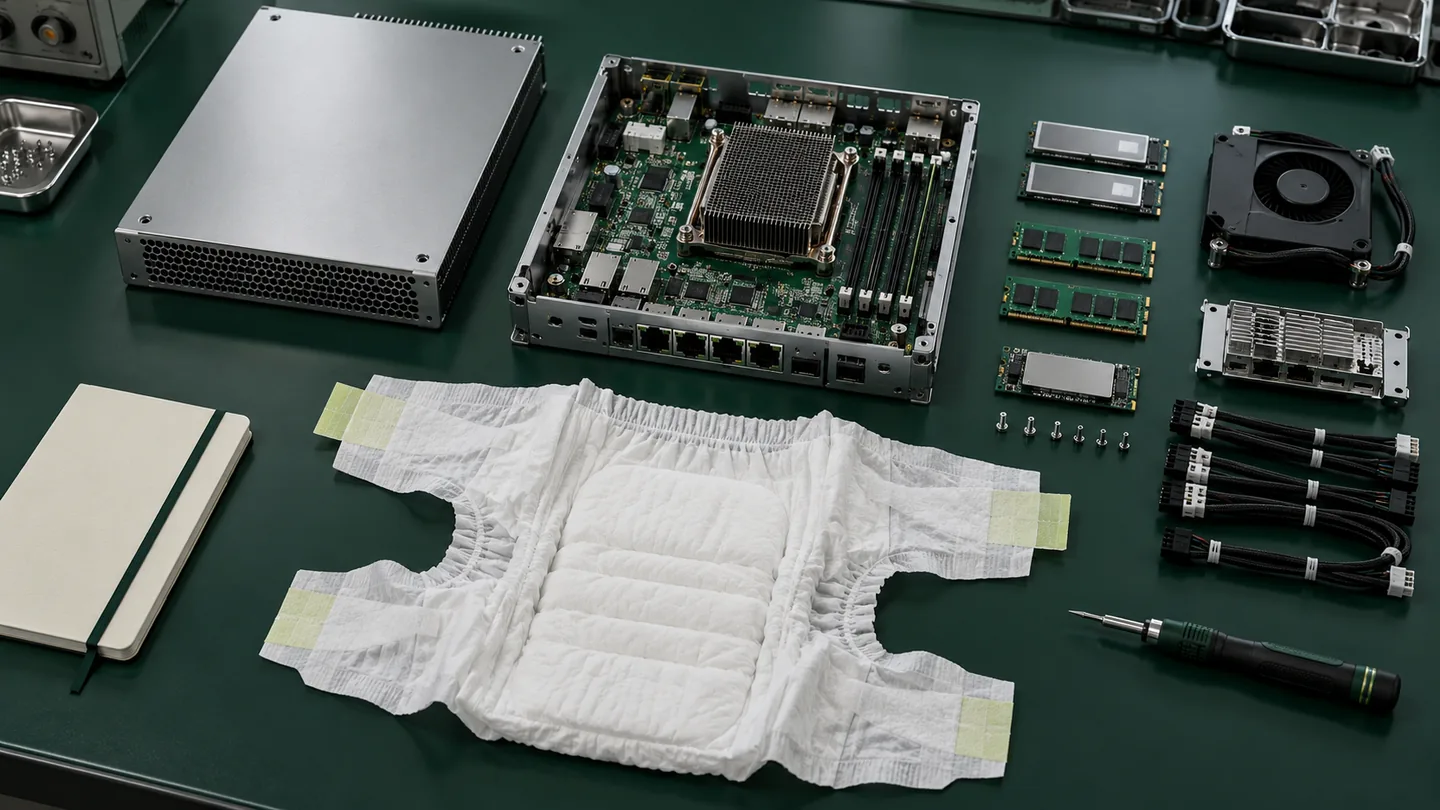
Open the diaper metaphor and see what each control does.
OMUTSU / LAYERS OF CARE
01
Classify the information.
Source records, sensitivity and ownership
02
Decide who can read it.
Identity, retrieval permissions and boundary tests
03
Control what goes out.
Destinations, tool permissions and human approval
04
Check it as it changes.
Logs, updates, regression checks and recovery
A conceptual explanation of controls, not a physical product specification or security measurement.
OMUTSU / FIT FOR REAL WORK
Examine protection through components and connections.AI-generated brand imagery, not a photograph of a customer or installed equipment.
Define information and action boundaries first.
ARCHITECTURE / REFERENCE DESIGN
The boundaries your company sets for information and actions
01Business dataOriginals, confidentiality, and updates
→
02Authentication and permissionsWho can use what
→
03Retrieval and AI infrastructureAuthorized documents and supporting sources
Approval before actionDestination controlsLogs, updates, and recovery
↓Only approved information, sent only to approved external AI services.
We review the content to be sent, its destinations, and the terms of use, and control the routes in the application.
With a focus on dedicated environments, we review the data paths for inference, retrieval, storage, and logging.
These are reference configurations. We assess both PrivateLLM and external AI against your information classifications, required quality, concurrent usage, and costs. We map data flows through search, OCR, logs, and maintenance connections, as well as how information entered into the model is handled.
THREATS & CONTROLS
“Side leaks,” in technical terms.
The following risks and controls are illustrative examples. They are neither measurements from specific products nor a claim that all attacks can be prevented.
Instructions hidden in documents
Risks considered
External content read by AI attempts to make it send other information elsewhere.
Safeguards to design
We do not treat source materials as trusted instructions. The system also enforces permissions for retrieval, tools, and transmission destinations, with human approval for important actions.
References across departments and projects
Risks considered
Documents the person asking cannot access appear in retrieval candidates or answers.
Safeguards to design
We connect user authentication to document permissions to control what can be searched, and check permission changes, deletions, and caches.
Unintended transfers to external AI
Risks considered
Information leaves the environment through OCR, embeddings, logging, and other paths as well as inference.
Safeguards to design
We map the destinations and information sent by each process, then check external connection permissions, settings, and live network traffic.
Excessive AI permissions
Risks considered
A tool intended only for research can also send, update, or delete information.
Safeguards to design
We separate read and update permissions, and design action validation, approvals, records, and procedures for stopping and recovering from failures.
Record what was prevented and what remains unresolved.
Set consistent test conditions.We record the work in scope, configuration, model and version, source materials, user permissions, and acceptance criteria.
Test normal use and troublesome scenarios.We test representative questions, long documents, concurrent usage, permission violations, instructions in external content, unauthorized transfers, and failures in connected systems.
Make informed decisions possible.We document tests, expected and actual results, fixes and retests, and remaining gaps to inform deployment and operating decisions.
When it changes, test again.We repeat the necessary tests when models, documents, permissions, or integrations change.
Turn technology into sustainable operations.
We clarify information ownership, responsibility for updates, support contacts, backups, and the scope of recovery and maintenance. The required configuration and support hours are determined by business criticality and contract terms.